How to spot a genuine below-original-price deal in Dubai
Not every "discount" in Dubai is real. Here is a practical test for telling a documented below-original-price deal from a marketing number, using evidence you can check yourself.
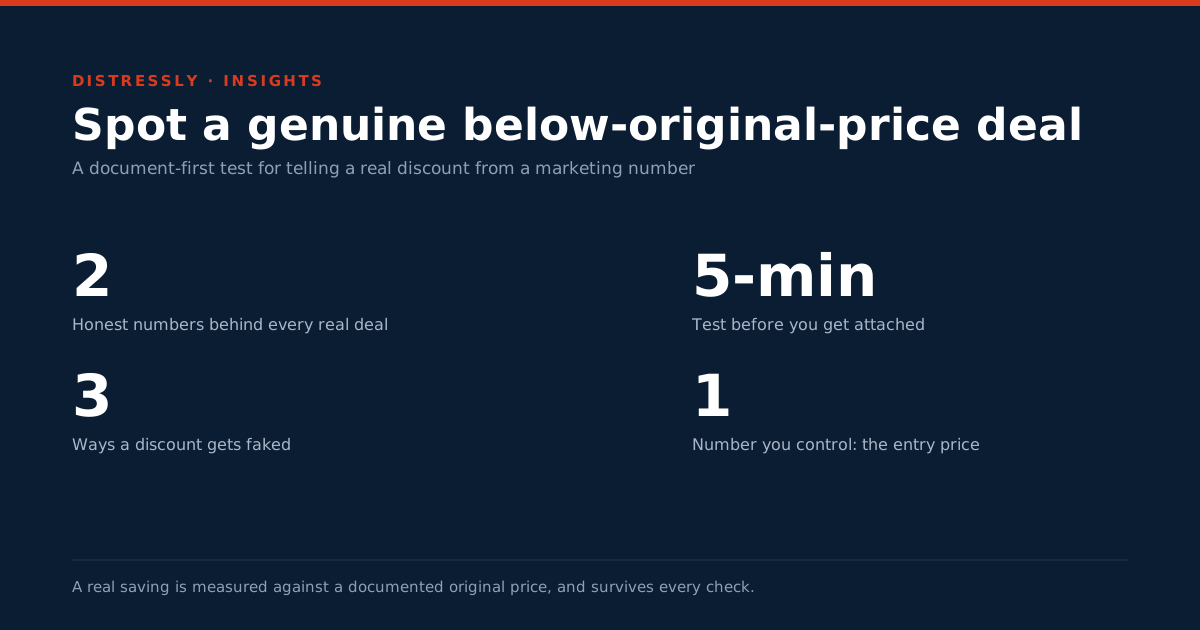
The word "discount" is the cheapest thing to print on a Dubai property listing. It costs nothing, it is rarely challenged, and it makes a fair price look like a bargain. A genuine below-original-price deal is a different thing entirely: it is a saving measured against a documented figure that survives every check you throw at it. This is how to tell the two apart before you spend a dirham.
Start from the original price, not the asking price
A real discount has two numbers behind it: the price the current owner actually paid or contracted at, and the price you are being offered today. The gap between them is the deal. A manufactured discount has only one honest number, the asking price, and an "original price" the seller invented so the gap looks large.
So your first question is never "how big is the discount?" It is "where did the original price come from?" On a ready resale home, that figure lives in the title deed and the Dubai Land Department transaction history. On an off-plan unit, it lives in the developer's sales and purchase agreement and the Oqood registration. If nobody can point you to that document, you do not have a discount, you have a story about one.
Three ways a discount gets faked
Most fake savings fall into one of three patterns. The first is the inflated anchor: the seller quotes an "original price" well above what the unit ever traded at, so a normal asking price looks like a cut. The second is the stale comparable: the discount is measured against a peak-market number from a hotter year, ignoring that the whole community has since repriced. The third is the bundle blur, where furniture, a waived service charge or a payment plan is folded into the headline so the price looks lower than the transferable value of the asset.
None of these survive a document check. That is the point. A real deal does not need a clever frame, because the numbers already tell the story.
Read the evidence a real deal leaves behind
A motivated, genuine seller usually leaves a trail you can follow. Ask for the title deed and confirm the name matches the person you are dealing with. Pull the service-charge history and check it is paid up, because arrears are both a negotiating lever and a warning. Look at what similar units in the same building actually closed at recently, not what they are listed at. On Distressly you can see what genuinely cleared in the sold deals, which is proof of price rather than hope.
If you want to go straight to listings where the gap is already documented and sized, filter to homes 10% or more below original price. Every discount there is calculated from a recorded original figure, not a claim.
Run the five-minute test
Before you get emotionally attached to any unit, run it through five quick questions:
- Can I see the original price on a document? If not, stop.
- Is the comparable recent and in the same community? A 2024 peak price is not a fair anchor in 2026.
- Is the discount measured on the transferable asset only? Strip out furniture, incentives and payment terms.
- Does the service-charge and title status check out? Clean paperwork protects the saving.
- Would this still look good if the seller had quoted no discount at all? A real deal is a good price on its own merits.
Why the entry price is the number that matters
The reason this discipline pays is arithmetic. Rent in a given community is set by tenants and does not move because you bought well, so the only lever you control is the price you pay. Buying below the documented original price lifts your yield by 1 / (1 - discount), turning a 7.15% community yield into roughly 7.94% on the same asset at a 10% saving. Run your own numbers in the investment tools, and read the deeper checklist in Top 10 signs a property discount is real.
A genuine below-original-price deal in the Dubai property market is not rare, but a verified one is the only kind worth buying. Distressly reviews every listing before it publishes and computes each discount from the documented original price, so what you see is a deal you can stand behind, not a headline you have to trust.