What the Distress Score means and how to read it
The Distress Score is a 0-100 read on how distressed a Dubai deal really is, built only from documented inputs. Here is exactly how it is calculated and why it refuses to guess.
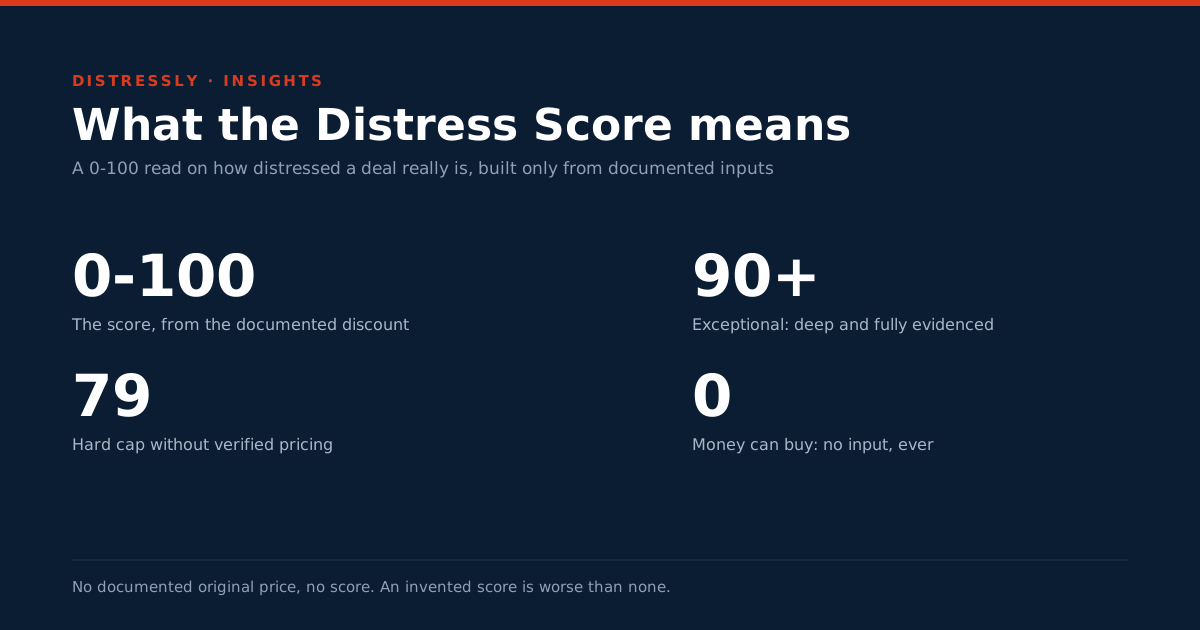
Every deal on Distressly can carry a Distress Score: a single number from 0 to 100 that tells you how distressed the pricing genuinely is. It exists to do one thing well, turn a documented discount into an honest, comparable signal, without letting anyone game it. Here is what the number means and how to read it.
What the score is built from
The score has one main ingredient and two small ones. The main ingredient is the documented discount against the original price. That figure is not typed by a seller; it is derived by the database from two stored prices, so it cannot be inflated by a marketing claim. Each percentage point below the original price is worth four points on the score, so a 25% saving reaches full marks on the discount component.
The two smaller ingredients are verification bonuses. A listing confirmed as priced below the wider market earns a few extra points, and one whose evidence was recently re-checked earns a few more. They are deliberately small, because the discount is the real signal and the badges only reinforce it.
The bands, and what they tell you
The final number falls into one of four bands:
- Normal (below 70): a modest or unproven saving. Worth a look, not a rush.
- Below Market (70 to 79): a real, sized discount, but the pricing evidence is still preliminary.
- Strong (80 to 89): a large, documented discount with verified pricing.
- Exceptional (90 and above): a rare, deeply discounted and fully evidenced deal.
Reading the band is the fast version. Reading the confidence behind it is the important version.
Why an unverified deal is capped
Here is the rule that makes the score trustworthy: a listing whose original price has not been checked against documentation cannot climb past 79, no matter how large the claimed discount. It stays capped at the top of the Below Market band. Only when a reviewer has confirmed the original purchase price against real paperwork does the score earn "high confidence" and become free to enter the Strong and Exceptional bands.
In plain terms: a seller who simply types a big "original price" cannot buy their way into a high score. The gap between what a listing could have scored and what it actually scored, when its pricing is unverified, is shown to you rather than hidden. That single cap is the most important line in the whole system.
What the score will never do
It will never take money. No advertising spend, promotion or payment field is an input, and none ever will be, because a score you can pay to raise is worthless. Ranking and advertising are kept in an entirely separate place from this number.
It will also never guess. If a listing has no documented original purchase price, there is no score at all, not a zero, nothing. An invented score is worse than no score, for the same reason an invented comparable is worse than no comparable. When you see a Distress Score, it is because there was real evidence to build it on.
How to use it when you shop
Treat the score as a filter, not a verdict. Use the band to shortlist quickly, then check the confidence to know how much the number has been proven. Cross-read it against the things it does not capture, service charges, building quality, handover risk, using the checks in Top 10 signs a property discount is real and the numbers in the investment tools. Browse the current deals and sort by the biggest verified discount from the home page.
The Distress Score is not a promise that a home is a good buy for you. It is an honest, tamper-resistant measure of how distressed the pricing is, and a reminder that on Distressly the discount is always calculated from a documented original price, never from a claim.