Off-plan vs ready distress deals in Dubai: which is the safer bargain?
Off-plan and ready homes both throw up genuine distress deals in Dubai, but they carry very different evidence and risk. Here is how to choose between them.
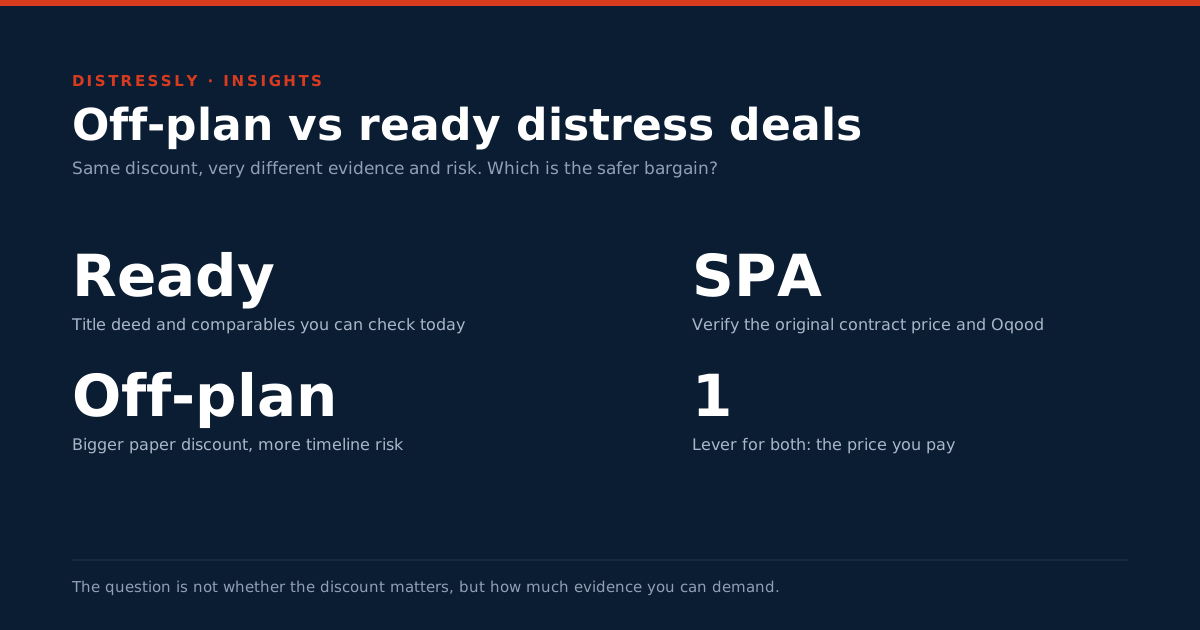
A distress deal is a distress deal, but where it sits in the build cycle changes almost everything about it: how the discount is proven, what can go wrong, and how fast you can move. In the Dubai property market both off-plan and ready homes regularly surface genuine below-original-price opportunities. Knowing which suits you is mostly about how much certainty you need.
How each kind of deal forms
A ready distress deal is a completed home whose owner needs to sell now. The trigger is usually personal: a relocation, a mortgage reset, a divorce, a portfolio decision. The unit exists, the title deed exists, and the seller is trading certainty for speed.
An off-plan distress deal is almost always an assignment, a resale of a contract before handover. The seller committed to a payment plan and can no longer carry it, or simply wants out before completion. The discount comes from their need to exit, not from the building itself, which may still be a construction site.
Where the discount is easier to prove
This is the decisive difference. A ready home comes with evidence you can check today: a registered title deed, a Dubai Land Department transaction history, a service-charge record, and comparables in the same building that have actually closed. You can measure a claimed discount against a documented original price and against what similar units really traded at.
An off-plan assignment is harder to verify because part of the value is a projection. You can still confirm the original contract price from the sales and purchase agreement and the Oqood registration, and that matters, but you are also betting on delivery date, final quality and the community's value at handover. The paperwork proves what was paid; it cannot prove what the finished unit will be worth.
On Distressly you can separate the two immediately: ready resale homes and off-plan. If the size of the documented gap matters more than the segment, filter straight to listings 10% or more below original price.
The risks each side carries
Ready deals carry fewer unknowns but usually a smaller headline discount, because the market prices a finished, verifiable asset tightly. Your risks are ordinary and checkable: service-charge arrears, a tired building, an over-optimistic comparable.
Off-plan assignments can show a larger paper discount, but the risks are structural: construction delay, a developer changing specification, a handover market that has softened, and assignment mechanics such as the developer's no-objection certificate and transfer fee. A 15% saving means little if the unit hands over into a community that has repriced 15% lower.
Which one fits you
Choose a ready distress deal if you want to check a real asset against real evidence, need the income or the home soon, and value certainty over a bigger headline number. It is the more conservative bargain, and in a liquid market there are plenty of them.
Choose an off-plan distress assignment if you can carry timeline risk, you have verified the original contract price and the developer's assignment terms, and the discount is large enough to survive a softer handover. Read Questions to ask before buying off-plan in Dubai and, if you go this route, Negotiating a distressed off-plan assignment in Dubai before you sign anything.
The one number that is the same for both
Whichever segment you pick, the lever is identical: the price you pay. Rent is set by tenants and does not move because you bought well, so a verified discount on the entry price is what lifts your return, by 1 / (1 - discount) on the same asset. Test it in the investment tools. The difference between off-plan and ready is not whether the discount matters, it is how much evidence you can demand before you trust it. Distressly calculates every discount from the documented original price, and shows you which segment each listing sits in, so you are always comparing like with like.